

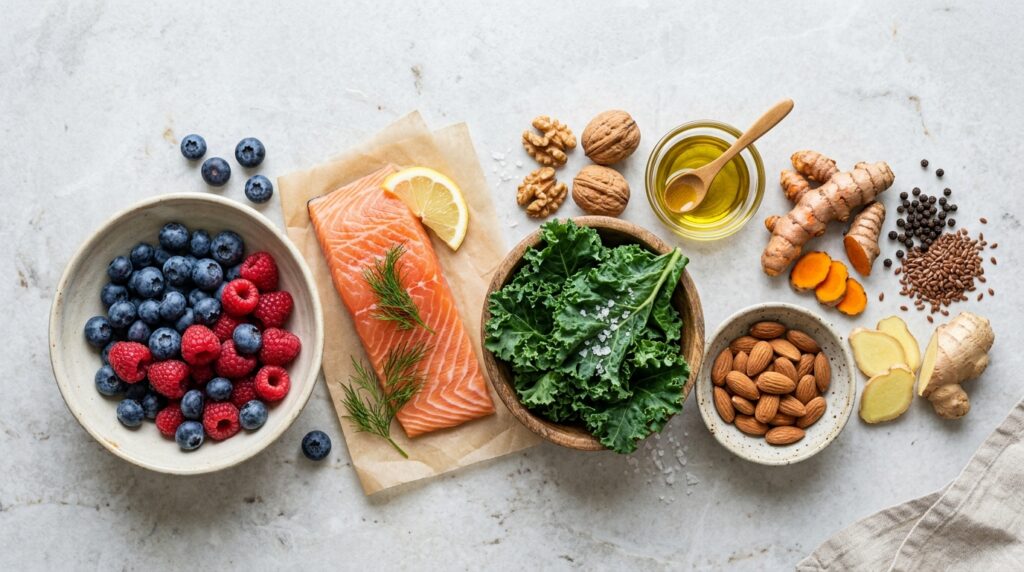
A few years ago, I sat across from a friend at brunch who’d just gotten her bloodwork back. Nothing dramatic just slightly elevated inflammatory markers, the kind of result that makes a doctor say “keep an eye on it” instead of “here’s a prescription.” She left that appointment more confused than reassured. What was she supposed to actually eat? Every article she found gave her the same vague advice: “reduce inflammation with a healthy diet.” Cool. What does that mean at 7am when she’s staring into the fridge?
That conversation is basically why this post exists. Inflammation isn’t some abstract wellness buzzword it’s a real, measurable process happening in your body right now, and food is one of the few levers you can pull on it every single day, three times a day, without a prescription.
So let’s skip the vague advice. Here’s what to actually eat, how much of it, what it does nutritionally, and why it matters.
What Chronic Inflammation Actually Is (Quickly)
Inflammation itself isn’t the enemy it’s your immune system’s short-term response to injury or infection, and it’s supposed to happen. The problem is chronic, low-grade inflammation: the kind that simmers quietly for years, linked to heart disease, type 2 diabetes, joint pain, gut issues, and even mood and energy problems. It doesn’t show up as a dramatic symptom. It shows up as “I’m just tired all the time” or “my joints ache for no reason.”
Diet is one of the biggest daily influences on this. Ultra-processed foods, excess sugar, and refined oils tend to fuel it. Whole, nutrient-dense foods tend to calm it. That’s the whole game.
The Foods Worth Building a Habit Around
1. Fatty Fish (Salmon, Sardines, Mackerel)
~200-230 calories per 3.5oz serving | High in omega-3 fatty acids (EPA/DHA), protein, vitamin D, selenium
Omega-3s are probably the single most-studied anti-inflammatory nutrient there is. They directly compete with the omega-6 fats that dominate most modern diets (think vegetable oils, packaged snacks) and help balance out that ratio. Salmon twice a week is the classic recommendation, but sardines are the underrated pick here cheap, sustainable, and just as potent.
2. Extra Virgin Olive Oil
~120 calories per tablespoon | Rich in monounsaturated fats and oleocanthal
Oleocanthal, a compound in high-quality EVOO, actually works on some of the same inflammatory pathways as ibuprofen. It’s a big part of why the Mediterranean diet keeps winning every long-term health study it’s put up against. Use it as your default cooking and finishing oil not just a garnish.
3. Leafy Greens (Spinach, Kale, Swiss Chard)
~7-35 calories per cup depending on the green | High in vitamin K, vitamin C, antioxidants, fiber
Leafy greens are basically calorie-free real estate for nutrients. Vitamin K in particular plays a direct role in reducing inflammatory markers in the blood. A cup of spinach in your eggs or smoothie is an easy, low-effort daily win.
4. Berries (Blueberries, Strawberries, Blackberries)
~50-85 calories per cup | High in anthocyanins, vitamin C, fiber
Anthocyanins are the pigments that give berries their color, and they’re some of the most powerful antioxidant compounds in the plant world. In my own tracking, berries are one of the easiest “upgrades” people make swapping a sugary breakfast pastry (300+ calories, minimal nutrients) for a bowl of mixed berries (under 100 calories, loaded with them).
5. Turmeric
~9 calories per teaspoon | Active compound: curcumin
Curcumin is one of the most researched natural anti-inflammatory compounds, though your body doesn’t absorb it well on its own pairing it with black pepper (piperine) increases absorption significantly. This is a genuinely low-effort addition: stir it into soups, rice, eggs, or a warm turmeric latte.
6. Nuts (Walnuts, Almonds)
~160-185 calories per ounce (about a small handful) | Healthy fats, vitamin E, magnesium
Walnuts specifically stand out because they’re one of the few nuts with a meaningful amount of plant-based omega-3s. A small handful a day not the whole bag is the sweet spot. This is exactly the kind of food where portion awareness matters, because nuts are calorie-dense and easy to overeat mindlessly.
7. Fatty Fruits Avocado
~240 calories per whole avocado | Monounsaturated fat, potassium, fiber
Avocado’s fat profile is similar to olive oil’s, plus it brings fiber and potassium that most people are short on. It’s calorie-dense, so this is a “quality over quantity” food half an avocado on toast beats a full one on a burger, calorie-wise, if you’re watching intake.
8. Fermented Foods (Yogurt, Kefir, Kimchi, Sauerkraut)
~100-150 calories per serving (varies widely) | Probiotics, protein, calcium
A huge amount of inflammation research over the past decade has circled back to gut health. Fermented foods support the gut microbiome, and a healthier gut lining means fewer inflammatory triggers leaking into the bloodstream. Plain Greek yogurt with berries (see above) is a genuinely great daily habit.
9. Green Tea
~2-5 calories per cup | High in EGCG (epigallocatechin gallate)
EGCG is a catechin with strong antioxidant activity, and green tea drinkers show up repeatedly in studies looking at lower inflammatory markers. Swapping one sugary drink a day for green tea is a small change that compounds both nutritionally and calorically.
10. Broccoli and Cruciferous Vegetables
~30-55 calories per cup | Sulforaphane, vitamin C, fiber
Sulforaphane is a compound almost unique to cruciferous vegetables, and it’s been linked to reduced inflammatory signaling. Roasting broccoli with olive oil (see #2) is a genuinely tasty way to get two anti-inflammatory foods in one dish.
11. Dark Chocolate (70%+ cacao)
~170 calories per ounce | Flavanols, magnesium
Yes, really but the percentage matters. Milk chocolate doesn’t carry the same flavanol content and adds a lot of sugar, which works against you. An ounce of dark chocolate a few times a week is a legitimate, evidence-backed indulgence, not a cheat.
12. Ginger
~4 calories per teaspoon fresh | Gingerol
Gingerol shares some chemical similarity to capsaicin and has documented effects on inflammatory pathways, plus it’s genuinely useful for digestion. Fresh ginger in tea, stir-fries, or smoothies is an easy daily add.
A Real Pattern I Noticed
When I started paying closer attention to my own inflammation-related habits (some joint stiffness that crept in around my mid-30s nothing serious, just annoying), the food swaps mattered less than the consistency. One salmon dinner a month does very little. Olive oil as your default fat, greens at most meals, berries instead of pastries, turmeric a few times a week done consistently for two or three months, that’s when people, including me, actually start noticing a difference in energy and joint comfort.
The catch is that “consistency” is genuinely hard to track in your head. Most people wildly underestimate how often they actually eat the good stuff versus how often they intend to. This is the exact gap where a habit slips.
Where Tracking Actually Comes In
This is where I’ll be upfront: I work with Diet Detect, and I’m not going to pretend this post exists in a vacuum but I also don’t think you need to download anything to benefit from what’s above. Eat the foods, that’s the real advice.
That said, if you’ve ever tried to eat “more anti-inflammatory” and lost track of whether you actually did it, that’s a very normal problem, and it’s the exact thing Diet Detect was built around. Instead of manually logging every ingredient:
- Snap a picture of your plate and it identifies the food and estimates calories and nutrients so you can actually see if you’re getting enough omega-3s, fiber, and antioxidant-rich produce, not just guessing.
- Describe what you ate in plain language (“salmon, spinach salad, olive oil dressing”) when a photo isn’t practical, and it logs the nutrition breakdown for you.
- Look back at your history calendar to see, honestly, how many days this month actually included fatty fish, greens, or berries versus how many you meant to.
- Check the analytics to spot patterns, like realizing your “healthy week” quietly had almost no omega-3 sources in it.
None of that replaces the food itself. But it closes the gap between what you plan to eat and what you actually eat, which in my experience, and in most people’s is where most healthy-eating intentions quietly die.
A Simple Way to Start
You don’t need to overhaul your whole diet tomorrow. Pick three from the list above and build them into meals you already eat this week:
- Olive oil instead of butter or vegetable oil for cooking
- Berries added to breakfast, whatever breakfast already is
- One fatty fish dinner this week
Then, if you’re someone who forgets what you ate by Wednesday (most of us are), logging it however loosely is the difference between a habit and a good intention.
Frequently Asked Questions
How quickly can anti-inflammatory foods make a difference?
Most people report noticeable changes in energy and joint comfort after 4-8 weeks of consistent eating, though bloodwork markers can take longer to shift measurably.
Can I eat too much of these foods?
Yes, particularly calorie-dense ones like nuts, avocado, and olive oil. They’re nutrient-dense, not calorie-free portion awareness still matters.
Is an anti-inflammatory diet the same as an elimination diet?
No. This is about adding beneficial foods regularly, not necessarily cutting foods out (though reducing ultra-processed foods and added sugar helps too).
Do I need supplements instead of food?
Whole foods are generally preferred first, since they come packaged with fiber, vitamins, and compounds that work together supplements can help fill specific gaps but shouldn’t be the starting point.