

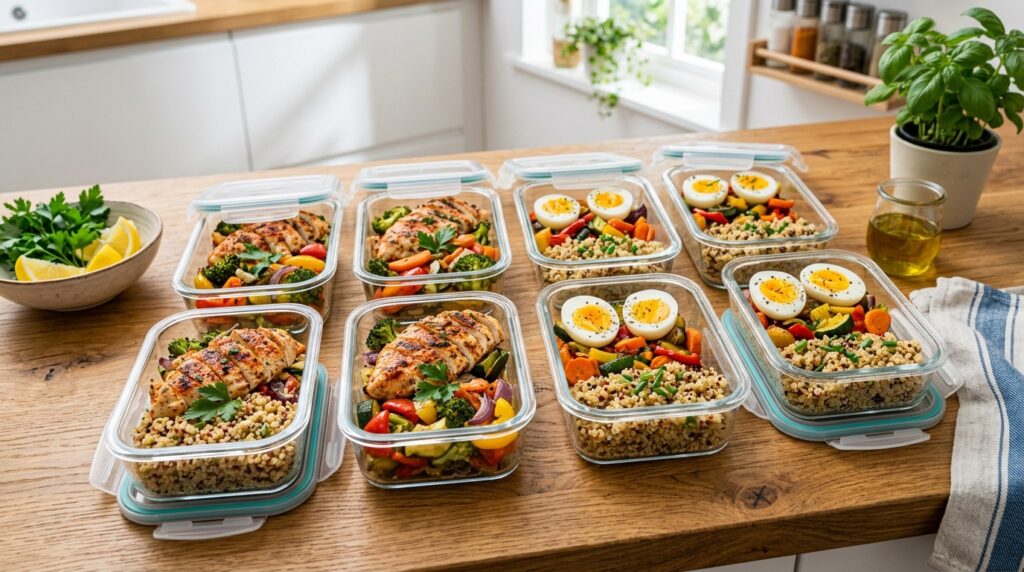
I’ll be honest with you upfront: most “high protein meal plans” you find online are copy-pasted templates nobody has actually tested on a real person. They look pretty, they have nice macros on paper, and then they completely fall apart on day three when life happens you’re tired, you didn’t meal prep, and the chicken breast and rice routine starts to feel like a punishment.
I’ve spent a lot of time around people trying to lose weight for the first time, and the pattern is almost always the same: they don’t fail because they lack willpower. They fail because nobody explained why protein matters, how much they actually need, and how to track it without it becoming a second job.
So this isn’t going to be a generic plan. It’s a 7-day high protein meal plan built for actual beginners, with the reasoning behind every choice, real numbers, a couple of stories from people who’ve used this approach, and a way to make tracking it painless instead of exhausting.
Why Protein Is the Real MVP of Weight Loss
Before the meal plan, you need to understand why protein gets so much attention in weight loss circles. It’s not a trend it’s basic physiology.
1. Protein keeps you full longer.
Protein has a stronger effect on satiety hormones (like PYY and GLP-1) than carbs or fat. That means a 400-calorie meal with 35g of protein will keep you satisfied far longer than a 400-calorie meal that’s mostly carbs. Fewer cravings, less snacking, less “why am I in the pantry at 9pm.”
2. Protein burns more calories to digest.
This is called the thermic effect of food (TEF). Your body spends roughly 20-30% of protein’s calories just digesting it, compared to 5-10% for carbs and 0-3% for fat. Eating more protein literally means burning slightly more calories doing nothing.
3. Protein protects your muscle while you’re in a calorie deficit.
This is the one beginners miss the most. When you eat fewer calories than you burn, your body will pull energy from fat and muscle unless you give it enough protein and resistance training to protect that muscle. Lose muscle along with fat, and your metabolism drops with it which is exactly why so many people regain weight after a diet. Adequate protein is your insurance policy against that.
4. It’s harder to overeat protein.
Have you ever eaten “just one more” grilled chicken breast the way you eat “just one more” handful of chips? Probably not. Protein-dense foods are naturally harder to binge on.
How Much Protein Do You Actually Need?
A simple, well-supported starting point for weight loss is:
0.7–1g of protein per pound of your goal body weight (or roughly 1.6–2.2g per kg of bodyweight).
So if you’re aiming for a goal weight of around 150 lbs, you’d target roughly 105–150g of protein per day. If math like this makes your eyes glaze over that’s completely normal, and it’s exactly the kind of thing that’s easier to let an app calculate for you rather than doing it manually every single day (more on that later).
A Quick Case Study: Why Tracking Matters More Than the Plan Itself
A friend of mine I’ll call her R., since she’d rather not be named tried to lose weight three separate times over two years. Each time she followed a meal plan almost identical to the one below. Each time she gave up by week two.
When we actually looked at what went wrong, it wasn’t the food. It was that she had no idea what she was actually eating once life got in the way a coffee with sugar here, a “small” portion that was actually 1.5x the recipe, a dinner out that she just guessed on. She wasn’t lying to herself on purpose; she just had no easy way to see the gap between her plan and her plate.
The fourth time, she started logging everything even quickly, even imperfectly using Diet Detect, just snapping a photo of her meals or typing a quick description when she didn’t feel like overthinking it. She wasn’t more disciplined. She just finally had visibility. Within 10 weeks she had lost 14 lbs, and more importantly, she kept it off because she could see her patterns building up in her history calendar instead of guessing in the dark.
This is the real lesson: a meal plan only works if you know whether you’re actually following it. That’s the part most blog posts skip.
The 7-Day High Protein Meal Plan
This plan is built around roughly 1,500–1,800 calories and 120–150g of protein per day, which fits most beginners aiming for a moderate, sustainable deficit. Adjust portions up or down based on your own numbers your age, activity level, and goal weight all matter, which is why I’ll show you how to personalize this at the end.
Day 1
- Breakfast: Greek yogurt (1 cup, plain, non-fat) + ½ cup berries + 1 tbsp peanut butter ~320 cal, 28g protein
- Lunch: Grilled chicken breast (150g) + quinoa (½ cup cooked) + steamed broccoli ~420 cal, 42g protein
- Snack: 2 boiled eggs + 1 small apple ~220 cal, 13g protein
- Dinner: Baked salmon (150g) + roasted sweet potato + green salad with olive oil ~480 cal, 38g protein
- Daily total: ~1,440 cal | ~121g protein
Day 2
- Breakfast: 3-egg veggie omelet (spinach, mushroom, tomato) + 1 slice whole grain toast ~340 cal, 24g protein
- Lunch: Turkey and black bean bowl with brown rice and salsa ~430 cal, 36g protein
- Snack: Protein shake (1 scoop whey + water/milk) ~150 cal, 25g protein
- Dinner: Lean beef stir-fry (120g beef) with mixed vegetables ~460 cal, 35g protein
- Daily total: ~1,380 cal | ~120g protein
Day 3
- Breakfast: Cottage cheese (1 cup) + sliced banana + cinnamon ~280 cal, 28g protein
- Lunch: Tuna salad (canned tuna, light mayo, celery) on whole grain wrap ~400 cal, 34g protein
- Snack: Roasted chickpeas (¼ cup) + a few almonds ~200 cal, 9g protein
- Dinner: Grilled shrimp (150g) + brown rice + sautéed zucchini ~440 cal, 36g protein
- Daily total: ~1,320 cal | ~107g protein
Day 4
- Breakfast: Protein oats (½ cup oats cooked with 1 scoop protein powder + milk) ~360 cal, 30g protein
- Lunch: Grilled chicken Caesar salad (light dressing) ~420 cal, 40g protein
- Snack: Greek yogurt + handful of walnuts ~250 cal, 18g protein
- Dinner: Baked cod (150g) + roasted potatoes + asparagus ~430 cal, 34g protein
- Daily total: ~1,460 cal | ~122g protein
Day 5
- Breakfast: 2 scrambled eggs + 2 turkey bacon strips + ½ avocado ~360 cal, 22g protein
- Lunch: Lentil and chicken soup with a side salad ~410 cal, 33g protein
- Snack: Protein bar (look for one with 15g+ protein, low sugar) ~200 cal, 16g protein
- Dinner: Lean pork tenderloin (150g) + cauliflower rice + green beans ~450 cal, 38g protein
- Daily total: ~1,420 cal | ~109g protein
Day 6
- Breakfast: Smoothie: protein powder, spinach, banana, almond milk, chia seeds ~340 cal, 28g protein
- Lunch: Turkey burger (no bun) over mixed greens with avocado ~420 cal, 35g protein
- Snack: Edamame (1 cup) ~190 cal, 17g protein
- Dinner: Grilled chicken thighs (skinless, 150g) + quinoa + roasted carrots ~470 cal, 39g protein
- Daily total: ~1,420 cal | ~119g protein
Day 7 (Flex / Reset Day)
- Breakfast: Veggie egg muffins (3) + whole grain toast ~330 cal, 24g protein
- Lunch: Leftover protein + veggies from earlier in the week (this is intentional low prep, low waste)
- Snack: Cottage cheese + pineapple ~230 cal, 22g protein
- Dinner: Your choice meal out or homemade just log it. This day is about proving you can stay consistent even when the plan isn’t rigid.
What Makes This Plan Actually Sustainable (Not Just a 7-Day Stunt)
- It repeats core ingredients. Chicken, eggs, Greek yogurt, and fish show up again and again so you’re not buying twelve random items you’ll use once.
- It includes a flex day on purpose. Rigid plans break the first time you eat at a friend’s house. This one builds in real life from day one.
- It doesn’t ask you to starve. 1,400–1,800 calories with high protein is a moderate deficit for most beginners sustainable, not punishing.
The Part Most Plans Leave Out: Tracking
Here’s my honest opinion after watching dozens of people try plans like this: the meal plan is maybe 30% of the result. Tracking is the other 70%.
You don’t need to weigh every almond for the rest of your life. But in the first few weeks, knowing roughly what you’re eating is what turns “I’m trying to eat better” into “I lost 12 lbs in 8 weeks.” Without it, you’re guessing, and guessing is where most weight loss attempts quietly die.
This is the exact gap Diet Detect was built to close and the part I genuinely think makes the biggest difference for beginners specifically:
- Snap a photo of your meal and let it estimate calories and protein instead of manually searching every food.
- Or just describe what you ate in plain language when you’re out, rushed, or don’t have your phone ready for a photo no barcode scanning, no database searching.
- See your history on a calendar so patterns become obvious like noticing you consistently undershoot protein on weekends, which is exactly when most people’s progress stalls.
- Check your analytics weekly to see if your protein and calorie averages are actually matching your goals, not just what you think you’re eating.
You don’t have to use it to follow this plan. But if you’ve tried meal plans before and quietly fallen off by day 10, the missing piece usually isn’t the food it’s not knowing where you actually stand day to day.
Common Beginner Mistakes (From Experience)
- Cutting calories too aggressively. Going below ~1,200 calories without medical supervision usually backfires you get hungrier, less consistent, and lose more muscle than fat.
- Ignoring hidden calories. Coffee creamers, dressings, and cooking oils add up fast and are the #1 thing people underestimate.
- All-or-nothing thinking. One “bad” meal doesn’t undo three good days. The people who succeed long-term are the ones who log the bad meal too and just keep going.
- Not adjusting protein as weight drops. Your protein target should be based on your goal weight, not your starting weight recalculate every 10-15 lbs lost.
Final Thoughts
A high protein meal plan works because the science behind it is genuinely solid satiety, thermic effect, muscle preservation. But the plan itself isn’t magic. What actually determines whether you lose weight and keep it off is consistency, and consistency depends on visibility into what you’re actually eating, week after week.
Start with this 7-day plan. Adjust the portions to your own numbers. And whatever tool you use to track it even if it’s just a notes app actually use it. That one habit will do more for your results than any “perfect” meal plan ever could.
If you want a low-effort way to keep yourself honest while following this plan, Diet Detect lets you log meals by photo or description and review your progress on a calendar and analytics dashboard built specifically for people who don’t want tracking to feel like a chore.
site: mydietdetect.com