

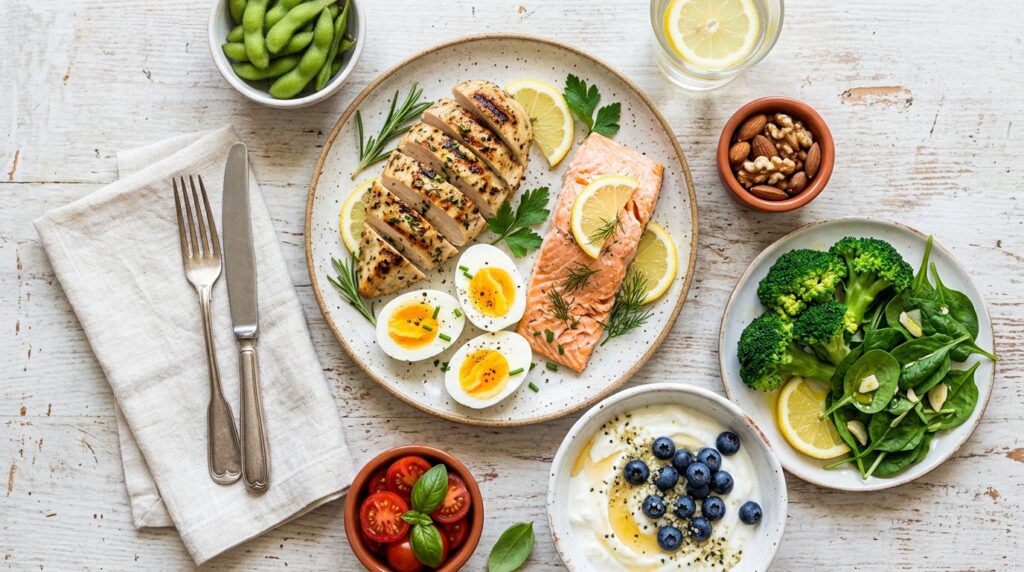
I used to think “eating high protein” just meant eating more chicken breast and calling it a day. Then I spent three months logging literally everything I ate, gram by gram, and realized something humbling: I was eating plenty of protein just buried under so many sneaky calories from sauces, oils, and “healthy” extras that my actual protein-to-calorie ratio was terrible.
That’s the real secret nobody tells you about high protein low calorie foods. It’s not just about picking protein-rich ingredients. It’s about picking the ones that give you the most protein for the fewest calories and then not accidentally undoing that math at the cooking stage.
This guide is the list I wish someone had handed me back then: real foods, real numbers, and the actual reasoning behind why this combination matters so much for fat loss, muscle retention, and just feeling less hungry all day.
Why High Protein, Low Calorie Actually Matters (Not Just Diet Trend Talk)
Before the list, a quick reality check on the science, because it changes how you’ll use it.
1. Protein has the highest thermic effect of food (TEF). Your body burns roughly 20-30% of the calories from protein just digesting it, compared to 5-10% for carbs and 0-3% for fat. So 100 calories of chicken breast doesn’t behave like 100 calories of rice in your body’s energy accounting.
2. Protein keeps you fuller for longer. Protein triggers satiety hormones (like PYY and GLP-1) more strongly than carbs or fat. This is the actual mechanism behind why a high protein breakfast stops you from raiding the snack drawer at 11am it’s not willpower, it’s hormones.
3. It protects muscle while you lose fat. When you’re in a calorie deficit, your body doesn’t only burn fat it’ll happily eat into muscle too if protein intake is too low. Adequate protein (most research points to roughly 1.6–2.2g per kg of bodyweight for active individuals) is what tells your body “keep the muscle, burn the fat instead.”
4. Low calorie density means you can eat satisfying volumes of food. This is the part people miss. A 200-calorie portion of grilled shrimp is huge. A 200-calorie portion of cheese is a few bites. Foods that are high protein AND low calorie let you eat a genuinely large, visually satisfying plate without blowing your daily target.
This combination high protein, low calorie is essentially the most efficient nutritional lever you have for body composition, whether your goal is fat loss, muscle definition, or just not feeling starving by 3pm.
The Complete High Protein Low Calorie Food List
All values below are approximate per 100g serving (raw or as noted), based on standard USDA nutrition data. Cooking method changes things significantly more on that below the list.
Lean Meat & Poultry
| Food | Calories | Protein | Notes |
|---|---|---|---|
| Chicken breast (skinless) | 165 kcal | 31g | The benchmark for a reason |
| Turkey breast (skinless) | 135 kcal | 30g | Slightly leaner than chicken |
| Pork tenderloin | 143 kcal | 26g | Most underrated lean meat |
| 95% lean ground beef | 137 kcal | 21g | Great for high-volume meals |
| Bison | 146 kcal | 22g | Naturally leaner than beef |
Seafood (Some of the Best Ratios on This List)
| Food | Calories | Protein | Notes |
|---|---|---|---|
| Shrimp | 99 kcal | 24g | One of the highest protein-to-calorie ratios that exists |
| Cod | 82 kcal | 18g | Extremely low calorie density |
| Tilapia | 96 kcal | 20g | Mild, easy to flavor without adding fat |
| Tuna (canned in water) | 116 kcal | 26g | Convenient and cheap |
| Halibut | 111 kcal | 21g | Great texture for grilling |
| Scallops | 88 kcal | 17g | Underused but excellent |
Eggs & Dairy
| Food | Calories | Protein | Notes |
|---|---|---|---|
| Egg whites | 52 kcal | 11g | Almost pure protein |
| Whole eggs | 143 kcal | 13g | The yolk adds calories but also nutrients don’t fear it |
| Non-fat Greek yogurt | 59 kcal | 10g | Best dairy option on this list |
| Low-fat cottage cheese | 81 kcal | 11g | Slept-on snack food |
| Skim milk | 34 kcal | 3.4g | Good liquid protein source |
Plant-Based Options
| Food | Calories | Protein | Notes |
|---|---|---|---|
| Edamame | 121 kcal | 11g | Also has fiber, which most meats lack |
| Lentils (cooked) | 116 kcal | 9g | High satiety from fiber + protein combo |
| Tofu (firm) | 144 kcal | 15g | Versatile, absorbs flavor well |
| Tempeh | 192 kcal | 19g | Denser, more filling than tofu |
| Black beans (cooked) | 132 kcal | 9g | Budget-friendly staple |
| Seitan | 370 kcal | 75g | Insanely high protein but check this isn’t “low calorie” in large portions protein-dense, not calorie-light |
Snacks & Extras
| Food | Calories | Protein | Notes |
|---|---|---|---|
| Edamame (roasted, salted) | 130 kcal | 12g | Good crunchy snack swap |
| Beef or turkey jerky | 116 kcal | 18g | Watch sodium content |
| Protein powder (whey isolate) | 110-130 kcal | 24-27g | Per scoop useful, not a meal replacement |
| Cottage cheese + berries | ~110 kcal | 12g | A genuinely great low effort snack |
Where People Actually Mess This Up (The Honest Part)
Here’s something most “high protein low calorie” lists skip entirely: the food on the list isn’t the problem the preparation usually is.
I’ve seen this pattern over and over, both in my own habits and from people who’ve told me about their own tracking struggles:
- A grilled chicken breast is ~165 calories. The same chicken breast pan-fried in butter and finished with a creamy sauce can quietly become 450+ calories. Same “high protein food,” completely different outcome.
- Tuna is one of the best foods on this list until it’s mixed with a few tablespoons of mayonnaise, which can add 200+ calories without adding a gram of protein.
- Greek yogurt is excellent. Greek yogurt with granola, honey, and dried fruit on top can turn a 60-calorie food into a 400-calorie bowl.
This is the exact mistake I made for months, and it’s the reason “eat more protein” advice alone doesn’t work for a lot of people they’re already eating the right base ingredients, but the calories are sneaking in at the cooking and topping stage where nobody’s actually counting.
How to Build a Plate Around This List
A simple framework that’s worked well in practice:
- Anchor every meal around one item from the lean meat/seafood/dairy/plant list above.
- Cook with measured amounts of oil, or use methods that need little to none grilling, baking, air-frying, or steaming.
- Add volume with vegetables, not sauces. Vegetables add almost no calories but a lot of physical fullness.
- Track it, at least at first. This sounds obvious, but most people drastically underestimate both portion sizes and “invisible” calories from oils, dressings, and sauces. Studies on self-reported food intake consistently show people underestimate their actual intake by a meaningful margin not because they’re lying, but because eyeballing portions is genuinely hard.
That last point is really where most high protein, low calorie efforts fall apart not from a lack of knowledge, but from a lack of accurate tracking. You can know this entire list by heart and still drift off target if you’re guessing at portions and forgetting the olive oil you cooked with.
This is honestly the exact gap Diet Detect was built to close. Instead of weighing every ingredient or trying to mentally calculate “okay, that’s about 150g of chicken plus a teaspoon of oil,” you can just snap a picture of your plate, or describe what you ate in plain language, and get the calorie and protein breakdown without the manual math. It also keeps a running history calendar, so if you’re trying to actually hit a protein target consistently (not just on the days you remember to track), you can look back and see the pattern instead of relying on memory.
It’s not about being rigid with food it’s more about closing that gap between “I’m eating high protein and low calorie” and “I can actually see that I am.”
A Realistic Example
To make this less abstract, here’s what a genuinely satisfying high protein, low calorie day can look like:
- Breakfast: 3 egg whites + 1 whole egg scrambled, with spinach roughly 190 calories, 24g protein
- Lunch: Grilled shrimp (150g) over a large mixed salad with lemon and a small drizzle of olive oil roughly 230 calories, 36g protein
- Snack: Plain non-fat Greek yogurt with cinnamon roughly 100 calories, 17g protein
- Dinner: Baked cod (150g) with roasted vegetables roughly 200 calories, 27g protein
Total: roughly 720 calories, 104g of protein and that’s before even counting a final snack or dessert allowance for the day. That’s the kind of result this food category makes possible: genuinely large meals, real satisfaction, and a protein number that supports muscle retention even in a calorie deficit.
Frequently Asked Questions
What is the single best high protein low calorie food? Shrimp and egg whites are usually at the top of any honest list both deliver protein at an extremely low calorie cost.
How much protein do I actually need per day? Most evidence-based recommendations land around 1.6–2.2g per kg of bodyweight for people who are active or trying to lose fat while keeping muscle. A 70kg person would target roughly 112–154g daily.
Are plant-based proteins as effective as animal proteins for this goal? Yes, with one caveat plant proteins are often less calorie-dense per gram of protein than animal proteins (tofu and lentils, for example, have a slightly lower protein-to-calorie ratio than chicken or shrimp). They’re still excellent, especially combined for a complete amino acid profile, but portion sizes may need to be a bit larger.
Do I need to track every single thing I eat forever? No but tracking accurately for even a few weeks tends to recalibrate your sense of portions and “hidden” calories in a way that sticks. This is usually the fastest way to actually internalize what a high protein, low calorie meal looks like on your own plate.
The Takeaway
High protein low calorie foods aren’t a diet gimmick they’re a genuinely efficient way to eat more food, feel fuller, protect your muscle, and still hit a calorie target. The list above covers the most useful options across meat, seafood, dairy, and plant-based sources, but the real difference between knowing this list and actually benefiting from it comes down to two things: how you prepare these foods, and whether you’re tracking accurately enough to know what’s actually happening on your plate.
If you want to skip the manual calculations, Diet Detect lets you log meals by photo or description and keeps your protein and calorie history in one place useful if you’re trying to actually apply a list like this one instead of just bookmarking it.