

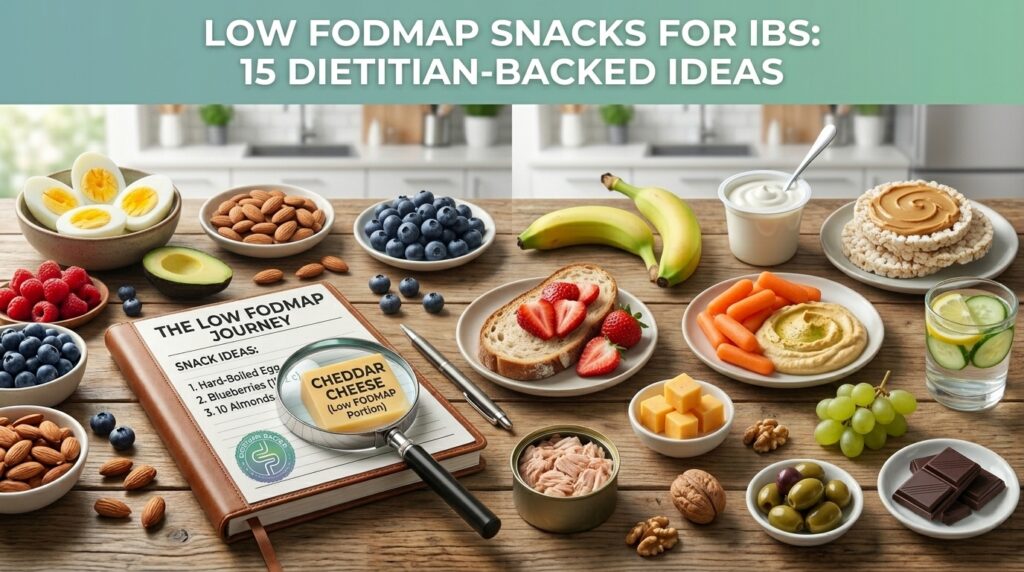
If you live with IBS, you already know that snacking isn’t as simple as reaching for whatever’s in the pantry. One wrong handful of trail mix and you’re paying for it for the rest of the day. The good news? You don’t have to give up snacking altogether you just have to snack smarter.
This guide breaks down real, practical, low FODMAP snacks, why they work for an IBS-friendly gut, and how to actually stick with the low FODMAP approach without turning every bite into a math problem.
Quick Refresher: What Does “Low FODMAP” Actually Mean?
FODMAP stands for Fermentable Oligosaccharides, Disaccharides, Monosaccharides, And Polyols short-chain carbs that are poorly absorbed in the small intestine. When they hit the large intestine undigested, gut bacteria ferment them, which can trigger the gas, bloating, cramping, and unpredictable bathroom trips that people with IBS know all too well.
The low FODMAP diet, originally developed by researchers at Monash University, isn’t about cutting out entire food groups forever. It’s about identifying which specific high-FODMAP foods trigger your symptoms, usually through an elimination-and-reintroduction process guided by a dietitian. Snacks matter here just as much as meals, because a “healthy” snack loaded with high-FODMAP ingredients like garlic powder, honey, or certain fruits can undo an otherwise well-planned day.
Why Snacking Right Matters More Than People Think
Here’s something that doesn’t get said enough: skipping meals or under-eating during the day because “safe” food isn’t around is one of the most common reasons IBS symptoms spiral. Long gaps between meals can slow digestion, then overeating later speeds it back up both extremes stress a sensitive gut.
Picture someone at a 2pm slump, starving after a small lunch, standing in front of a vending machine with nothing but chips, chocolate bars with high-fructose corn syrup, and gum sweetened with sorbitol (a polyol a classic IBS trigger). They eat something anyway because hunger wins. That’s the exact situation planned low FODMAP snacks solve.
15 Low FODMAP Snacks, With the Nutrition Info That Actually Matters
Portion size matters a lot in FODMAP terms many foods are low FODMAP in small servings and high FODMAP in large ones. Amounts below are based on Monash University serving guidelines.
- Rice cakes (2) with peanut butter (1 tbsp) ~170 calories, 5g protein, 7g fat. Peanut butter is low FODMAP in a 2-tablespoon serving; sticking to one keeps it comfortably safe.
- Lactose-free yogurt (170g) with strawberries (5 medium) ~150 calories, 12g protein. Regular dairy is a common trigger because of lactose; lactose-free versions give you the protein and probiotics without the fermentable sugar.
- Hard-boiled eggs (2) ~140 calories, 12g protein. Naturally FODMAP-free, portable, and satiating.
- Carrot sticks (1 cup) with a small amount of hummus (2 tbsp) ~110 calories. Chickpea-based hummus is low FODMAP only in small servings (around 2 tbsp), since chickpeas contain GOS in larger amounts.
- Plain popcorn (3 cups, air-popped) ~90 calories, 3g fiber. A whole grain that’s naturally low FODMAP and satisfying to chew, which matters for the psychological side of snacking.
- Hard cheese, like cheddar or parmesan (30g/1oz) ~110 calories, 7g protein. Hard, aged cheeses are naturally low in lactose.
- Firm tofu (100g), pan-fried ~145 calories, 15g protein. Firm and extra-firm tofu are low FODMAP; silken tofu is not worth knowing the difference.
- Grapes (1 cup) ~60 calories. A low FODMAP fruit that satisfies a sweet craving without the fructose overload found in apples or pears.
- Kiwi (2 medium) ~90 calories, 4g fiber. Also gently supports regularity, which is genuinely helpful for the constipation-predominant IBS subtype.
- Walnuts (10 halves) or pumpkin seeds (2 tbsp) ~100–120 calories, healthy fats. Low FODMAP in moderate servings; great for the 3pm crash.
- Rice crackers with sliced turkey breast ~140 calories, 10g protein. A savory, high-protein option for when sweet snacks aren’t appealing.
- Banana (firm, slightly under-ripe) ~90 calories. Ripe bananas creep into moderate FODMAP territory, so slightly under-ripe is the safer choice.
- Dark chocolate (2 small squares, 70%+ cacao) ~85 calories. A genuine treat that stays low FODMAP in small amounts, unlike milk chocolate or candy with high-fructose corn syrup or sorbitol.
- Oat cakes with a thin spread of almond butter (1 tbsp) ~150 calories. Almonds are low FODMAP up to about 10 nuts or 1 tbsp of butter.
- Cucumber slices with a squeeze of lemon and salt ~20 calories. Almost zero calorie, genuinely gut-neutral, and surprisingly satisfying as a crunchy palate cleanser.
A Realistic Snacking Scenario
Imagine someone mid-flare, terrified to eat anything between meals because the last three “healthy” snacks all backfired. Turns out, the common thread was garlic and onion powder hiding in flavored crackers and hummus two of the most notorious hidden FODMAP triggers, since they show up in seasoning blends, sauces, and even some deli meats. This is a pattern many people with IBS encounter: it’s rarely the “obvious” foods that trip you up, it’s the ones with ingredient lists you didn’t check closely.
That’s the real lesson here low FODMAP snacking isn’t about memorizing a list once. It’s about consistently checking labels, watching portions, and noticing patterns over time.
Why Tracking Makes the Low FODMAP Journey So Much Easier
Here’s the honest truth: most people don’t fail at the low FODMAP diet because the food list is hard. They fail because they lose track of what they ate three days ago when a symptom flares up, and by then it’s impossible to connect the dots.
This is where a bit of structure helps enormously. If you’re snapping a photo of your snack or jotting down what you ate right when you eat it, you build a real record not a guess reconstructed from memory at 9pm.
This is honestly one of the things Diet Detect was built for. Instead of manually logging every ingredient, you can snap a picture of your snack or just describe it in plain language, and it estimates the calories and nutrition breakdown for you. Because it keeps a history and calendar view, you can scroll back and actually see, “I had the hummus and crackers Tuesday, and Tuesday night was rough” instead of trying to remember three days later. Over time, the analytics view starts showing patterns most people would never catch on their own, like a certain snack showing up again and again on the days symptoms spike.
You don’t need it to follow this list but if you’ve ever finished a bad flare-up day thinking “wait, what did I eat yesterday,” it’s the kind of tool that fills in that gap.
A Few Practical Tips for Low FODMAP Snacking
- Watch stacking. One low FODMAP food is usually fine. Three low-to-moderate FODMAP foods eaten together can add up to a moderate or high total load.
- Read labels for onion and garlic. They hide in stocks, sauces, seasoning blends, and even some flavored snacks marketed as “healthy.”
- Reintroduce systematically. The low FODMAP diet isn’t meant to be permanent and restrictive forever the elimination phase is typically 2–6 weeks, followed by structured reintroduction with a dietitian to find your personal triggers.
- Don’t skip snacks out of fear. Under-eating tends to backfire more than a slightly imperfect snack choice.
FAQ
Are low FODMAP snacks the same as low-calorie snacks?
No. FODMAP content and calorie content are unrelated. A low FODMAP snack can be calorie-dense (like nuts) or very light (like cucumber). Choose based on your energy needs, not just FODMAP status.
Can I stay low FODMAP forever?
Most dietitians recommend it as a short-term elimination phase, not a lifelong diet, since long-term restriction can affect gut microbiome diversity. Reintroduction is a key part of the process.
What’s the single most common low FODMAP snack mistake?
Portion size. Foods like hummus, almonds, and avocado are only low FODMAP in small, specific amounts going over the threshold reintroduces the same symptoms you’re trying to avoid.
The Bottom Line
Low FODMAP snacking doesn’t have to mean bland, boring, or complicated. With the right choices and a simple way to track what you’re eating and how your body responds you can snack confidently instead of anxiously. Start with two or three options from this list, pay attention to how you feel, and let the pattern guide the rest.