

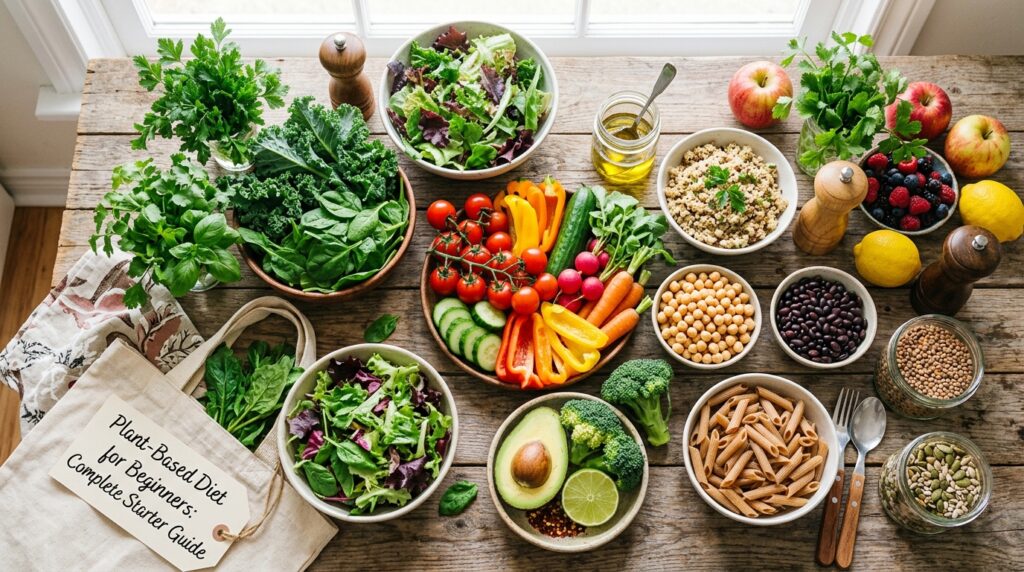
I’ve watched a lot of people try to “go plant-based” the same way they try a new gym routine in January full enthusiasm, zero plan, and a crash by week three. Usually not because plants don’t work. Because nobody told them the actual mechanics: how many calories they need, where protein is going to come from now, and what happens to their energy levels in the first two weeks while their gut adjusts.
This guide is the one I wish more people got on day one. No guilt-tripping about animal products, no “just eat a salad” hand-waving. Just what actually works, what tends to go wrong, and how to set yourself up so this isn’t your third failed attempt.
What “Plant-Based” Actually Means (It’s Not One Diet)
People use “plant-based” to mean wildly different things, and that’s part of why beginners get confused scrolling through advice online.
- Whole food plant-based (WFPB): minimally processed plants vegetables, fruit, legumes, whole grains, nuts, seeds. No animal products, and processed foods are minimized too.
- Vegan: no animal products at all, but processed vegan foods (vegan junk food, mock meats, oat milk lattes) are fully on the table.
- Flexitarian / plant-forward: mostly plants, with occasional meat, dairy, or eggs.
None of these is “more correct” than the others. What matters is picking the version that matches your actual goals weight management, heart health, ethics, environmental reasons, or just wanting more variety because that choice changes what your plate should look like.
Why This Actually Matters: The Nutrition Case
This isn’t just a trend recommendation. A body of research on plant-forward eating patterns links them to lower rates of heart disease, type 2 diabetes, and certain cancers, largely because of higher fiber intake, more antioxidants, and less saturated fat. Fiber alone is doing a lot of work here it’s the nutrient most Americans are chronically under-eating, and it’s the thing that keeps your blood sugar stable and your digestion functional.
But and this is the part beginner guides gloss over plant-based doesn’t automatically mean healthy or automatically mean you’ll lose weight. Oreos are vegan. French fries are plant-based. You can absolutely overeat refined carbs and added sugar on this diet and end up worse off than before. The diet’s benefits come from what you’re replacing animal products with, not from the mere absence of meat.
That’s why calorie and nutrient awareness matters here more than on most diets, not less. You’re rebuilding your plate from scratch, and a few nutrients need deliberate attention.
The Nutrients Beginners Actually Need to Watch
This is the section that separates a well-run plant-based diet from one that leaves you tired, foggy, or nutrient-deficient six months in.
Protein. Plants absolutely contain enough protein the myth that you can’t get enough on a vegan diet is outdated. Most adults need roughly 0.8g per kg of bodyweight daily (more if you’re active or strength training, closer to 1.2–1.6g/kg). The catch is that plant proteins are less calorie-dense per gram than animal protein, so you need to be a little more intentional. Lentils, tofu, tempeh, edamame, seitan, chickpeas, and quinoa are your workhorses. A cup of cooked lentils has about 18g of protein for around 230 calories solid, but you’ll want two or three protein-forward foods per day rather than relying on one.
Vitamin B12. This is the non-negotiable one. B12 is made by bacteria, not plants, and it’s essential for nerve function and red blood cells. There is no reliable plant food source. If you’re eating a fully plant-based diet, you need a B12 supplement or fortified foods (nutritional yeast, fortified plant milks) this isn’t optional, and deficiency can take months or years to show symptoms, by which point it’s more serious.
Iron. Plant iron (non-heme) is absorbed less efficiently than the iron in meat. Pair iron-rich foods lentils, spinach, tofu, pumpkin seeds with vitamin C (citrus, bell peppers, tomatoes) to boost absorption significantly.
Omega-3s. Plant sources (flaxseed, chia, walnuts, algae oil) give you ALA, but your body converts it to the more usable EPA/DHA at a fairly low rate. An algae-based omega-3 supplement is worth considering, especially if fish was previously your main source.
Calcium and Vitamin D. If you’re cutting dairy, calcium-set tofu, fortified plant milks, tahini, and leafy greens (cooked kale, bok choy spinach’s calcium is poorly absorbed) help fill the gap. Vitamin D often needs supplementing regardless of diet, especially in winter months or low-sun climates.
Zinc. Found in beans, nuts, seeds, and whole grains, but phytates in these foods can reduce absorption slightly. Soaking, sprouting, or fermenting (think sourdough, tempeh) helps.
None of this is meant to scare you off. It’s meant to replace vague anxiety (“am I getting enough of everything?”) with a short, specific checklist you can actually act on.
A Real Example of What Goes Wrong (and How to Fix It)
A common pattern I see: someone switches to plant-based, swaps meat for a big pile of pasta or rice, and technically eats “more food” but ends up under-fed on protein and over-fed on refined carbs. Two to three weeks in, they’re hungrier than before, more tired in the afternoon, and start wondering if plant-based just “doesn’t work for them.”
The fix isn’t more willpower it’s rebalancing the plate. The switch that usually solves it: build meals around a protein anchor first (tofu, lentils, beans, tempeh), then add a complex carb, then fill the rest with vegetables and a fat source (nuts, seeds, olive oil, avocado). It sounds simple because it is but almost nobody explains it this directly to beginners, so they default to “remove meat, keep everything else the same,” which is where the fatigue and hunger complaints usually come from.
How Many Calories Do You Actually Need?
This is where a lot of plant-based content goes strangely silent, as if calories don’t apply here. They do.
Your calorie needs depend on age, sex, weight, height, and activity level there’s no universal number. But as a rough starting point, many adults maintain weight somewhere in the 1,800–2,600 calorie range, with more active people and larger bodies needing more. If your goal is weight loss, a modest deficit of 300–500 calories below maintenance is a sustainable place to start rather than anything extreme.
The plant-based twist: because whole plant foods are more fiber-dense and less calorie-dense than processed or animal foods, you often need a slightly larger volume of food to hit your calorie target which is actually one of the underrated wins of this way of eating. You can eat a genuinely satisfying amount of food and still land in a reasonable calorie range, as long as you’re not leaning on ultra-processed vegan snacks and oils by the spoonful.
This is exactly the part where most people lose the thread not because the concept is hard, but because tracking calories and nutrients by hand, food by food, gets tedious fast. This is where I’ll be upfront about our app, Diet Detect: instead of logging every ingredient manually, you can snap a photo of your plate or just describe what you ate in plain language, and it estimates the calories and breaks down protein, fiber, iron, B12, and the other nutrients above. It also keeps a running history and calendar, so you can actually see patterns like “I’ve been low on protein three days this week” instead of guessing. You don’t need it to eat plant-based successfully, but if you’ve ever quit tracking because it felt like a chore, that’s the exact problem it’s built to remove.
A Simple Day of Eating (Beginner-Friendly)
- Breakfast: Oatmeal with chia seeds, banana, and peanut butter, plus a fortified plant milk (B12 + calcium covered)
- Lunch: Chickpea and quinoa bowl with roasted vegetables, tahini dressing, and a squeeze of lemon (iron + vitamin C pairing)
- Snack: Hummus with bell pepper strips, or a handful of walnuts
- Dinner: Tofu or tempeh stir-fry with broccoli, bell peppers, and brown rice
- Optional: A B12 and algae-based omega-3 supplement, taken with a meal
This isn’t a rigid meal plan to follow forever it’s a template. Swap proteins, grains, and vegetables freely once you get the hang of the pattern: protein + complex carb + vegetables + healthy fat, repeated across meals.
Common Beginner Mistakes (and Quick Fixes)
- Not eating enough overall plants are less calorie-dense, so “eating normally” often means under-eating. Fix: track for a week to see where you actually land.
- Skipping the B12 supplement “I’ll get it from food” doesn’t reliably work here. Fix: take it consistently, don’t treat it as optional.
- Relying on one protein source beans every single day gets boring and nutritionally narrow. Fix: rotate between legumes, tofu, tempeh, seitan, and whole grains.
- Assuming vegan = healthy vegan cookies are still cookies. Fix: prioritize whole foods most of the time; treats are fine occasionally.
- Giving up after a rough week energy dips in week one or two are common as your gut microbiome adjusts to more fiber. Fix: increase fiber gradually and drink enough water.
The Honest Bottom Line
A plant-based diet can absolutely support strong health outcomes and sustainable weight management but it works best when you treat it like any other nutrition strategy: with attention to calories, protein, and a short list of nutrients that need backup. It’s not about perfection or eating a certain way forever. It’s about understanding your own numbers well enough that you’re not guessing.
If you want a low-effort way to see those numbers what you’re eating, how much, and what you might be missing that’s exactly the gap Diet Detect was built to fill, whether you’re logging a home-cooked meal or a takeout plate you didn’t plan for.