

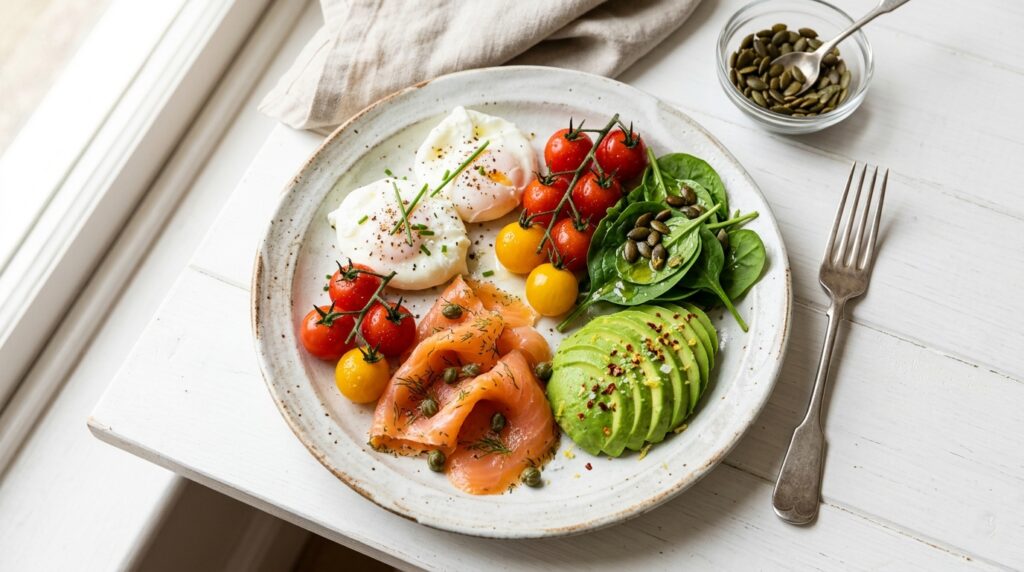
I used to be a serial breakfast-skipper. Then a bagel-and-orange-juice breakfast person. Then, somewhere around my third round of “why am I starving by 10 AM,” I finally figured out what was going on: my breakfast was basically a sugar bomb wearing a napkin.
Once I switched to low-carb, protein-forward breakfasts, two things happened almost immediately my energy stopped crashing mid-morning, and I stopped raiding the office snack drawer by 11. That’s not a coincidence, and it’s not just me. It’s backed by fairly simple biology, and once you understand why it works, picking the right breakfast becomes a lot easier.
This post isn’t about deprivation. It’s about eating breakfasts that are satisfying, realistic for a weekday morning, and actually support the number on the scale with real calorie and macro breakdowns so you’re not guessing.
Why Low-Carb Breakfasts Are So Effective for Weight Loss
A few things are working in your favor when you cut carbs (not eliminate cut) at breakfast:
1. Blood sugar stability. A high-carb breakfast think cereal, toast, pastries spikes your blood sugar fast. Your body responds by releasing insulin to bring it back down, and that sharp drop is often what triggers the “hangry” crash and cravings an hour or two later. A lower-carb breakfast keeps that curve much flatter, so you’re not fighting cravings before lunch even arrives.
2. Protein’s thermic effect. Your body burns more calories digesting protein than it does digesting carbs or fat roughly 20-30% of protein’s calories go toward digesting it, compared to 5-10% for carbs. A high-protein, low-carb breakfast is quite literally more metabolically expensive to process.
3. Satiety. Protein and fat are far more filling per calorie than refined carbs. A 350-calorie low-carb breakfast with eggs and avocado will keep you full much longer than a 350-calorie bowl of sugary cereal, simply because it slows digestion and doesn’t spike-then-crash your blood sugar.
4. Fewer decision points. When you’re not riding a blood sugar rollercoaster, you make calmer food choices for the rest of the day. This is the part nobody talks about enough weight loss is as much about decision fatigue as it is about calories.
None of this means carbs are “bad.” It means breakfast is a strategic place to dial them back, because it sets the tone physically and mentally for the rest of your day.
What Actually Counts as “Low Carb” for Breakfast
There’s no official rulebook, but as a rough guide:
- Low carb: under 15-20g net carbs
- Very low carb / keto-adjacent: under 10g net carbs
- Moderate low carb: 20-30g net carbs, still far below a typical bagel-and-juice combo (which can easily hit 80-100g)
The ideas below fall mostly in the 5-20g range, with calories and macros listed so you can fit them into your actual daily targets rather than eyeballing it.
9 Low-Carb Breakfasts Worth Actually Making
1. Three-Egg Veggie Scramble with Avocado
~380 calories | 26g protein | 8g net carbs | 27g fat
Whisk 3 eggs, cook with spinach, mushrooms, and a bit of feta. Top with a quarter avocado. This is my personal go-to on busy mornings 8 minutes, one pan, and it holds me until 1 PM most days.
2. Greek Yogurt with Berries and Chia
~250 calories | 22g protein | 14g net carbs | 8g fat
Full-fat plain Greek yogurt (skip the flavored ones they’re sugar in disguise), a small handful of berries, a tablespoon of chia seeds. The chia adds fiber and slows digestion even further.
3. Smoked Salmon and Cream Cheese “Roll-Ups”
~320 calories | 24g protein | 3g net carbs | 22g fat
Smoked salmon, a thin spread of cream cheese, capers, red onion, rolled up like a wrap without the wrap. Feels indulgent, isn’t.
4. Cottage Cheese Bowl with Cinnamon and Almonds
~280 calories | 25g protein | 9g net carbs | 12g fat
Underrated breakfast. Full-fat cottage cheese, a sprinkle of cinnamon, a few almonds. High protein, genuinely filling, takes 90 seconds to assemble.
5. Sausage and Egg Muffin Cups (Meal-Prep Friendly)
~310 calories per 2 muffins | 22g protein | 4g net carbs | 22g fat
Bake eggs, crumbled sausage, and cheese in a muffin tin. Make 12 on Sunday, grab 2 on your way out the door all week. This is the one I recommend most to people who “don’t have time” for breakfast.
6. Almond Flour Pancakes with Sugar-Free Syrup
~340 calories | 14g protein | 10g net carbs | 26g fat
Yes, low-carb pancakes exist and they’re good. Almond flour, eggs, a touch of baking powder, topped with sugar-free syrup and a few berries.
7. Bulletproof-Style Coffee + Protein
~230 calories | 20g protein | 2g net carbs | 15g fat
Coffee blended with a tablespoon of MCT oil or butter and a scoop of unflavored protein. Not for everyone, but great for people who genuinely aren’t hungry in the morning and want something light but effective.
8. Turkey Bacon, Egg, and Cheese “Sandwich” (Cloud Bread or Lettuce)
~350 calories | 28g protein | 5g net carbs | 22g fat
Swap the bread for cloud bread or large lettuce leaves. You still get the sandwich experience without the carb load.
9. Chia Seed Pudding with Coconut Milk
~260 calories | 8g protein | 11g net carbs | 18g fat
Made the night before chia seeds soaked in unsweetened coconut milk, vanilla, a touch of stevia. Good option if you want something sweet and low-effort.
A Quick Case Study: What Changed for One of My Readers
A reader named Priya (shared with her permission) told me she’d been stuck at the same weight for four months despite “eating healthy.” Her breakfast was a large fruit smoothie she assumed was low-calorie because it was fruit and yogurt turns out it was closer to 65g of carbs and 480 calories, mostly from banana and honey.
We swapped it for the Greek yogurt and berries bowl above (250 calories, 14g net carbs) and she paired it with tracking her meals for three weeks. She lost 4 pounds in that window without changing anything else not because low-carb is magic, but because she’d been unknowingly under-eating protein and over-eating carbs at the one meal she thought was “safe.”
This is genuinely the most common pattern I see: people aren’t eating badly, they’re eating blind. They don’t actually know what’s in their meals.
The Mistake Most People Make With Low-Carb Breakfasts
They think “low carb” automatically means “low calorie,” and it doesn’t. Bulletproof coffee, nut butters, cheese, bacon these are all low-carb and calorie-dense. It’s very possible to eat a “clean” low-carb breakfast and still be in a calorie surplus, especially if you’re not tracking portions.
This is exactly where most low-carb plans quietly fall apart not because the food choices are wrong, but because nobody’s actually watching the calories add up.
This Is Where Tracking Actually Makes a Difference
Here’s the honest truth: none of the breakfasts above will do much for weight loss if you don’t have a sense of your overall calorie and carb picture across the day. You don’t need to obsess over it, but you do need visibility.
That’s the exact gap I built Diet Detect for. Instead of manually logging every ingredient, you can just snap a photo of your scramble or your yogurt bowl, or describe it in plain language (“3 egg scramble with spinach and feta, half avocado”), and it estimates the calories and macros for you. Over time, the history calendar shows you patterns like Priya’s case, where a “healthy” breakfast was quietly working against her and the analytics make it obvious whether your low-carb mornings are actually landing where you think they are.
You don’t need the app to eat well. But if you’ve ever wondered whether your “healthy” breakfast is really doing what you think it’s doing, it’s a pretty fast way to find out.
Quick FAQ
Do I need to go full keto for a low-carb breakfast to help with weight loss?
No. Even dropping from a 70-80g carb breakfast to a 15-20g one makes a meaningful difference in blood sugar stability and satiety, without needing to hit strict keto macros.
Is fruit off-limits at breakfast?
Not entirely a small handful of berries (as in a few of the ideas above) is low enough in carbs to fit comfortably. Bananas, large servings of tropical fruit, and fruit juice are the bigger carb offenders.
What if I’m not hungry in the morning?
That’s fine a smaller, protein-forward option like the bulletproof coffee or a single boiled egg with cheese works better than forcing a full meal.
How do I know if my breakfast is actually working for my goals?
Track it for a week or two. This is genuinely the fastest way to see whether a breakfast that “feels healthy” is actually calorie- and carb-appropriate for you logging it by photo or description is the easiest way to do that without the manual math.
The Bottom Line
Low-carb breakfasts work for weight loss because they stabilize blood sugar, keep you fuller longer, and cost your body more energy to digest not because carbs are the enemy. Pick two or three of the ideas above that actually sound appealing to you (consistency beats perfection every time), and if you want to know exactly how they’re impacting your numbers, track a week of them and see what the pattern tells you.