

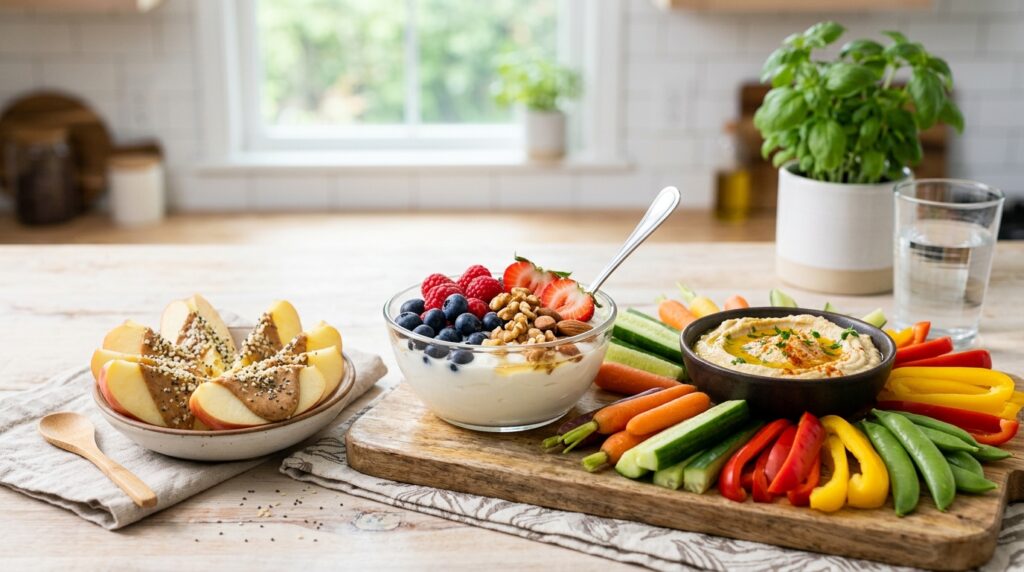
I used to think snacking was the enemy of weight loss. Every diet article I read in my twenties said the same thing: “cut out snacks, eat three clean meals, stay disciplined.” I tried it. I lasted about eleven days before I was standing in front of the fridge at 9 PM eating cereal straight from the box.
Here’s what nobody told me back then: snacking isn’t the problem. Snacking blind is the problem.
The people I’ve talked to who’ve actually lost weight and kept it off almost never say “I stopped snacking.” They say some version of “I changed what I snack on, and I started paying attention to what it actually cost me.” That second part paying attention is the piece most blog posts skip entirely, and it’s the piece that actually moves the needle.
So this isn’t going to be another “10 snacks under 200 calories” list with no context. Let’s talk about why snacking matters, what actually makes a snack “good” for weight loss, and then get into real options with real numbers.
Why Snacking Isn’t Your Enemy (If You Do It Right)
There’s a reason “just don’t snack” fails for most people: it fights your biology instead of working with it.
When you go 5-6 hours without eating, your blood sugar drops, ghrelin (your hunger hormone) spikes, and your brain starts prioritizing any available calories over good calories. That’s not a willpower failure that’s just how a hungry brain works. A well-timed snack keeps blood sugar stable, keeps hunger from snowballing, and honestly makes it easier to make good decisions at your next meal.
The research on this is pretty consistent: it’s not whether you snack, it’s what and how much. A 150-250 calorie snack with protein and fiber can help control appetite and support fat loss. A 400-calorie snack of chips and soda does the opposite it adds calories without keeping you full, so you end up eating a full meal on top of it anyway.
This is where most people get tripped up, and honestly, where I got tripped up for years you don’t actually know how many calories are in your snack unless you measure it. A “handful of almonds” can be 90 calories or 300 depending on the handful. Estimating is where weight loss plans quietly fall apart.
What Actually Makes a Snack Good for Weight Loss
Before the list, here’s the criteria I use and that most registered dietitians agree on:
- Protein (5g+): Protein is the most satiating macronutrient. It keeps you full longer per calorie than carbs or fat.
- Fiber (3g+): Fiber slows digestion and blunts blood sugar spikes, which means less of that “hungry again in 40 minutes” feeling.
- Reasonable calorie density: 150-250 calories is the sweet spot for most people trying to lose weight, though this depends on your total daily targets.
- Low in added sugar: Added sugar spikes insulin, crashes your energy, and triggers more cravings the opposite of what you want between meals.
If a snack hits 3 of these 4, it’s doing its job.
Healthy Snacks for Weight Loss That Actually Work
1. Greek Yogurt with Berries
~150 calories | 15g protein | 3g fiber
Plain, non-fat Greek yogurt has almost double the protein of regular yogurt for fewer calories. Add half a cup of berries and you get fiber and antioxidants without much sugar. This is the snack I recommend most because it’s genuinely filling the protein keeps you satisfied for hours, not minutes.
2. Apple with 1 Tbsp Peanut Butter
~190 calories | 4g protein | 5g fiber
The fiber in the apple plus the fat and protein in the peanut butter is a classic combo for a reason it slows digestion significantly compared to eating either alone. The key detail people miss: it’s one tablespoon, not a heaping spoonful straight from the jar (which can quietly add 100+ extra calories).
3. Hard-Boiled Eggs (2)
~140 calories | 12g protein | 0g fiber
Not the most exciting snack, but one of the most effective. High protein, very low calorie density, and portable. Pair with a small piece of fruit if you want fiber alongside it.
4. Roasted Chickpeas
~120 calories per 1/4 cup | 6g protein | 5g fiber
An underrated snack. Roasted chickpeas satisfy the “crunchy salty snack” craving that usually sends people toward chips, but with fiber and protein doing real work instead of empty calories.
5. Edamame (1 cup, shelled)
~190 calories | 17g protein | 8g fiber
One of the highest-protein plant snacks you can eat. The shelling process also naturally slows you down, which believe it or not helps with satiety too. Eating slower gives your brain time to register fullness.
6. Cottage Cheese with Pineapple
~160 calories | 14g protein | 1g fiber
Cottage cheese is criminally underused. It’s packed with casein protein, which digests slowly and keeps hunger away longer than whey-based options. The pineapple adds natural sweetness without needing added sugar.
7. A Handful of Almonds (about 15)
~105 calories | 4g protein | 2g fiber
Nuts are calorie-dense, so portion matters more here than almost anywhere else on this list. This is exactly the kind of snack where “eyeballing it” goes wrong 15 almonds and 40 almonds look similar in a bowl but are very different in calories.
Here’s the Part Most Snack Lists Leave Out
Every snack above is genuinely good. But here’s something I’ve noticed talking to people who’ve actually lost weight and kept it off: the snack choice matters less than most people think consistency and awareness matter more.
You can eat perfect snacks for a week and still stall if you’re not seeing the full picture what you ate at lunch, how your snacks add up across the day, whether your “healthy” choices are actually within your calorie range. Weight loss isn’t really about finding the one magic snack. It’s about knowing, day after day, whether what you’re eating lines up with your goal.
This is honestly why I built Diet Detect. I got tired of the “estimate and hope” approach to tracking. With Diet Detect, you can just snap a photo of your snack the apple and peanut butter, the yogurt bowl, whatever’s in front of you or describe it in plain language, and it logs the calories and nutrition automatically. No manual searching through food databases, no guessing portion sizes.
What’s made the biggest difference for people using it isn’t the logging itself it’s the history calendar and analytics. You start to actually see patterns: that your 3 PM slump snack is quietly costing you 400 calories a day, or that your protein intake is way lower than you thought. That kind of visibility is what turns “I’m trying to eat healthy” into “I can see exactly what’s working.”
You don’t need it to enjoy any of the snacks on this list. But if you’ve ever wondered whether your snacking is actually helping or quietly working against you, that’s the exact question it’s built to answer.
Quick Comparison Table
| Snack | Calories | Protein | Fiber |
|---|---|---|---|
| Greek yogurt + berries | 150 | 15g | 3g |
| Apple + peanut butter | 190 | 4g | 5g |
| 2 hard-boiled eggs | 140 | 12g | 0g |
| Roasted chickpeas (¼ cup) | 120 | 6g | 5g |
| Edamame (1 cup) | 190 | 17g | 8g |
| Cottage cheese + pineapple | 160 | 14g | 1g |
| Almonds (15) | 105 | 4g | 2g |
Frequently Asked Questions
How many calories should a weight loss snack have?
Most people do well with snacks in the 150-250 calorie range, though this depends on your total daily calorie target. Two snacks a day at this range typically fit into most weight loss plans without crowding out meals.
Is it better to snack or eat three big meals?
Neither approach is objectively better what matters is your total daily calories and how well a pattern controls your hunger. Some people do better with 2-3 small snacks between meals; others do better with fewer, larger meals. Track a couple of weeks of each and see what actually keeps you full and on-target.
Can I lose weight and still snack every day?
Yes. In fact, planned snacking often makes weight loss more sustainable because it prevents the extreme hunger that leads to overeating later. The goal isn’t zero snacks it’s snacks that fit your calorie and nutrition goals.
What’s the biggest mistake people make with weight loss snacks?
Underestimating portions and not tracking. A snack that “should” be 150 calories often ends up being 300+ once real portions are measured which is exactly the gap that calorie tracking closes.